How PT Helps
A Physical Therapist assesses each patient’s needs based on a medical history and physical exam. Treatment programs are customized to assist each patient in returning to their pre-injury function or resuming normal activities without pain. They do this in several ways.
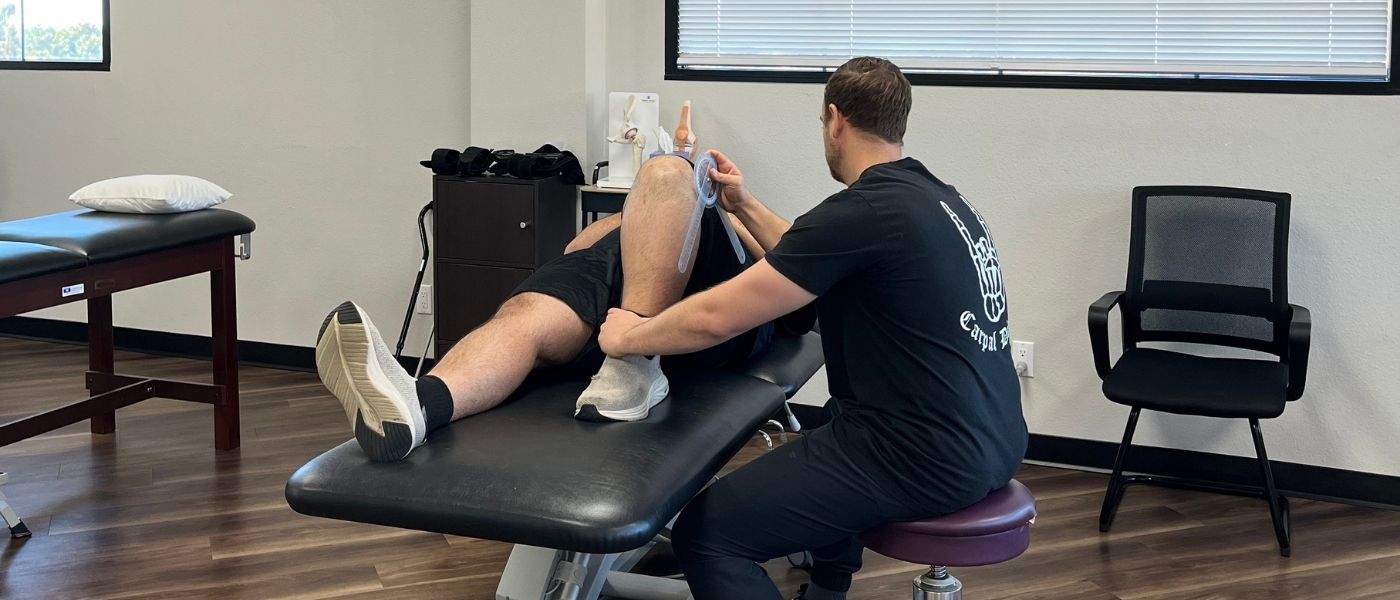
Passive range of motion (PROM): The Physical Therapist will manually perform PROM (i.e., muscles are not activated by the patient) by flexing and extending the leg. This helps discourage fluid buildup and maintain range of motion when the leg muscles are not supposed to be activated. PROM is also helpful when the range of motion exercises are too painful for the patient to engage in.
Active range of motion (AROM): The Physical Therapist will encourage AROM (i.e., muscles are activated by the patient) with stretches and exercises that help flexion (bending the knee) and extension (straightening the knee). AROM is critical following injury and surgery to maintain function.
Strengthening: Exercises that strengthen the muscles supporting the knee improve pain and function by minimizing wear and tear of the joint, controlling knee movement, and reducing impact with weight-bearing activities. Targeted muscle groups include:
- Quadriceps: Made up of four muscle groups located on the front of the thigh, they help straighten the knee, walk, stand, run, jump, and squat.
- Hamstrings: Made up of three muscles on the back of the thigh, they help bend the knee, extend the leg at the hip, and rotate the hip.
- Abductors: Located on the outer thigh, they help move the leg away from the body at the hip joint.
- Adductors: Located on the inner thigh, they help move the leg at the hip joint toward or across the body.
- Gluteus medius: Located at the buttocks, this muscle helps in abduction and internal rotation of the hip joint.
- Gluteus maximus: Located at the buttocks, this muscle aids in extension, external rotation, and leg abduction at the hip joint.
Bracing: A Physical Therapist may recommend a brace to support and/or protect the knee joint, based on the injury and mechanism of pain. Compression sleeves provide gentle support and pain relief. Some braces offer structural support following injury and during certain physical activities and sports. Some braces restrict ROM to protect against injuries and allow time for healing.
Other treatment recommendations may include activity modification, kinesiology tape, heat and/or ice, and assistive devices such as a walker or crutches.
By targeting the muscles that support the knee, improving flexibility, and using techniques that protect the joint during healing, PT can significantly reduce pain and improve day-to-day function. With a personalized treatment plan and the guidance of a skilled Physical Therapist, most patients can return to the activities they enjoy with greater stability and quality of life.